
How VALORANT works - 1.4
Maps: sites, mid, chokes
In one line: Every map has two or three sites, a central area (mid) and narrow passages (chokes): knowing how they connect is the basis of every decision.
The parts of a map
Every VALORANT map is built from the same pieces, even if each one puts them together differently.
- The spawn areas of the two teams, on opposite sides of the map.
- The sites: two on most maps (A and B), three on some (A, B and C). This is where the spike gets planted.
- The mains: the main corridors leading from the attacker side to each site.
- Mid: the central area linking the sites.
- Chokes: narrow passages where players can only go through one or two at a time.
On top of that, each map has its own features: doors that open and close, ropes to climb, teleporters, breakable parts, places where you can fall off the map. You will discover them map by map on the map pages.
Sites and their entrances
You understand a site by looking at how you get in. There are almost always at least two entrances for the attack: the main and a side path, often from mid. The defense usually has a more direct route from its spawn (often called the site's "CT" side).
That is why attackers try to enter from several sides or to block vision from one side with utility, while defenders try to cover the entrances with few players and wait for help. Studying a site means asking: how many entrances, how wide are they, where does the defense watch them from, how long does a defender from the other site take to arrive.
Three-site maps (such as Haven and Lotus) are harder to defend: with five players you cannot put two on every site, so the defense has to rotate more.
Why mid matters so much
Mid is the center of the map and links the sites. Whoever controls it has two advantages:
- they move faster: from mid you reach every site by the shortest route;
- they see more: from mid you hear and see whoever crosses from one side to the other.
For the attack, taking mid means choosing the site at the last moment and threatening two of them. For the defense, losing mid means no longer knowing where the attack will go and having to rotate along longer routes. That is why in so many matches the first fight of the round happens in mid.
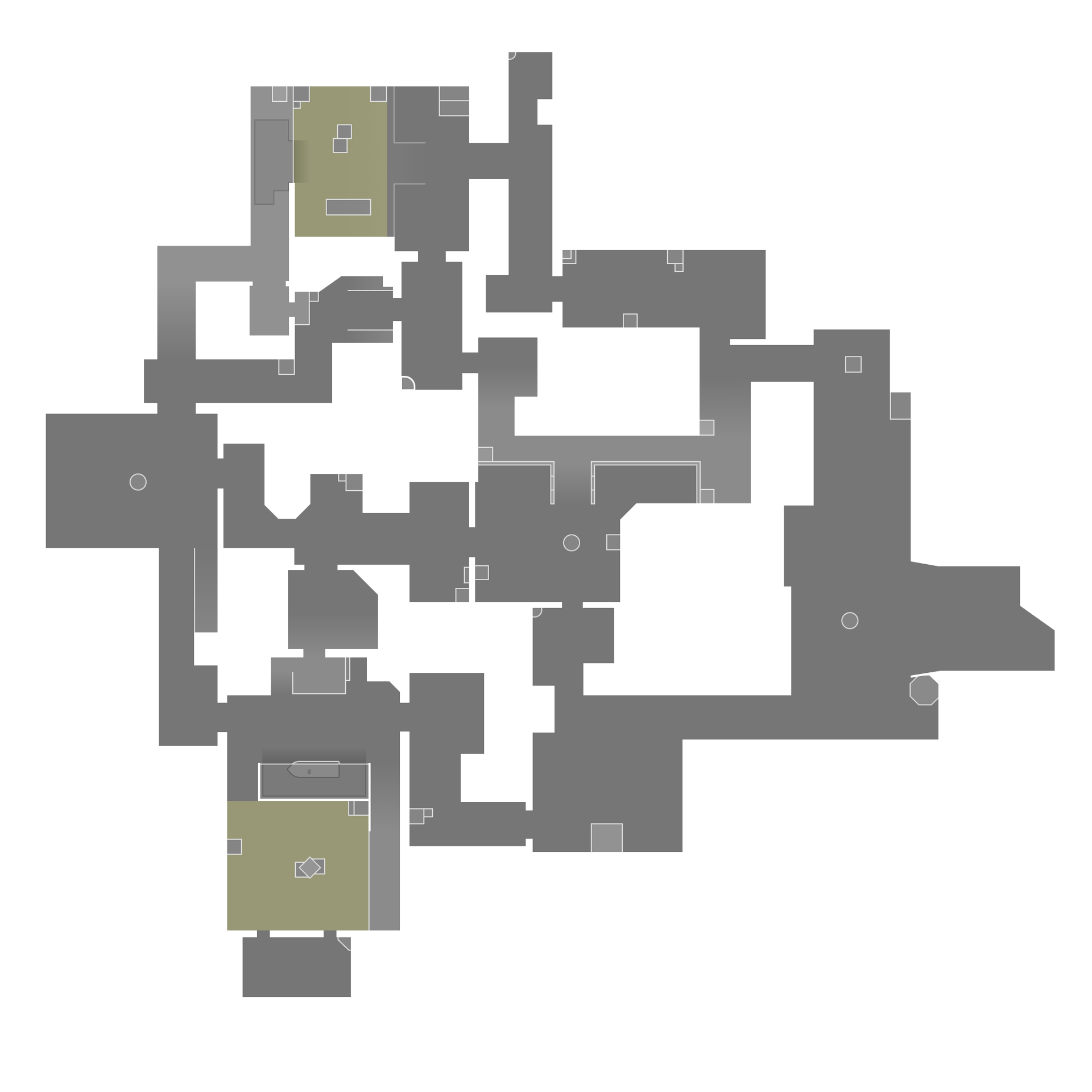
Callouts: the names of places
Every area of every map has a name: A main, B long, mid, heaven, CT and so on. These are callouts, and they let you tell your team where the enemies are in two words. Many of them are written on the in-game minimap.
Learning the callouts is the first thing to do on a new map, before positions. A tip: load into a custom game alone, walk around the map and read the names on the minimap out loud. Ten minutes of that beats ten matches of saying "he's there, by the thing".
Special features
Many maps have features that change how they play, and you need to know them before anything else:
- doors that open and close, blocking a passage for a while;
- ropes and ladders to move between levels;
- teleporters that link distant areas in a moment, and make noise;
- breakable parts that open new lines of fire during the round;
- places where you can fall off, where an ability or a shot can knock you off the map.
Each feature has a sound and a timing: knowing how long a door takes or how far a teleporter can be heard is information you use every round. The map pages cover each map's features.
How to approach a new map
You learn a map in layers, not all at once:
- the callouts and the overall shape: where the sites, mid and mains are;
- rotations: how long it takes to get from one site to the other, and by which route;
- common positions: where defenders usually sit, where attackers come from;
- the map's ideas: what is strong on this map, what wins rounds, which agents use it best.
The map pages cover all these layers, with an interactive map. A good approach is the one from our reading path: one map at a time, studied properly, before moving on to the next.
Remember
- Every site has at least two entrances: main and a path from mid or another area.
- Mid links the sites: whoever controls it moves faster.
- Chokes are where utility gets used and where most players die.
- Learn a map's callouts before anything else.